Snorkelling is one of the easiest and most enjoyable ways to explore the underwater world. Whether you’re swimming over coral reefs or gliding through calm coastal waters, having the right gear can make all the difference to your comfort, safety, and overall experience. If you’re just getting started, it’s helpful to know exactly what basic equipment is needed—and why it matters.
This guide breaks down the essential snorkelling gear you need and highlights a few extras that can enhance your time in the water.
Snorkelling Mask
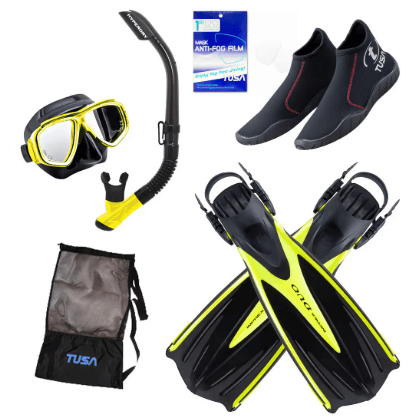
The mask is your window to the underwater world. It allows you to see clearly beneath the surface by creating an air pocket in front of your eyes. A good snorkelling mask should have a snug but comfortable fit, a high-quality silicone skirt to prevent leaks, and tempered glass lenses for safety. Adjustable straps are also important to keep the mask secure without putting too much pressure on your face. Some masks come with anti-fog coatings or work well with anti-fog solutions, which help maintain clear visibility during your snorkel.
Snorkel
The snorkel allows you to breathe while your face is in the water, so you can focus on the view instead of constantly lifting your head. There are a few types to choose from:
- Traditional snorkels are simple open tubes that require you to clear water manually.
- Semi-dry snorkels have a splash guard at the top to reduce the amount of water entering.
- Dry-top snorkels feature a valve that closes when submerged, keeping water out entirely.
Look for features like a flexible tube for easier positioning, a comfortable silicone mouthpiece, and a purge valve to easily expel any water that does get in.
Fins
Fins help you move more efficiently through the water, saving energy and allowing for longer snorkelling sessions. They come in two main styles:
- Full-foot fins, which slip on like shoes and are best for warm water and casual use.
- Open-heel fins, which have adjustable straps and are often worn with booties for added comfort and protection.
Choosing the right size and fin stiffness is key—too tight can cause discomfort, while too loose may lead to blisters or slipping off mid-swim.
Optional But Useful Extras
a) Snorkelling Vest
A snorkelling vest adds buoyancy and helps you float effortlessly on the surface. It’s especially useful for children, beginners, or those planning to snorkel for extended periods.
b) Rash Guard or Wetsuit
These provide added protection from the sun, jellyfish stings, and abrasions. They also help retain some body warmth, particularly in cooler water or during longer sessions.
c) Anti-Fog Solution
Fogging can quickly ruin your visibility. Using a mask-specific anti-fog solution or mild baby shampoo before entering the water can prevent this and improve your overall experience.
For a full range of reliable snorkeling gear, consider pieces that are designed for both comfort and performance across a variety of conditions.
See also: Do BMW Vehicles Require Specialised Oils, Parts, or Diagnostic Tools?
Tips for Choosing the Right Gear
When it comes to snorkelling gear, fit is more important than brand or price. Try on masks and fins before purchasing, or choose adjustable options to ensure a secure fit. Opt for gear with soft silicone components, as these are more comfortable and durable than plastic alternatives. Brightly coloured gear also helps improve visibility in the water, which is a bonus for safety, especially in open or busy environments.
In Closing
The basic snorkelling setup includes three essential pieces: a well-fitting mask, a quality snorkel, and a comfortable pair of fins. Together, these form the foundation for a safe and enjoyable underwater experience. While optional extras like vests, rash guards, and anti-fog treatments aren’t required, they can greatly enhance your comfort and confidence, particularly for longer snorkels or varied water conditions.
Invest in gear that fits well and suits your activity level, and you’ll be ready to dive into your next aquatic adventure with ease.