Most people think of home security as a “one-off thing”-you take care of it once, and you don’t have to think about it anymore. Sadly, thinking this way can bring a whole world of trouble your way.
Neglecting regular upkeep and your door security can significantly compromise your property’s safety over time.
Why We Tend To Ignore Our Front Doors
Because most of us are inherently optimistic. That’s why most homeowners operate under a slight fallacy, believing that burglary happens to other people. This false belief prevents many from performing even the most basic of security audits.
Then, there’s the “if it ain’t broke, don’t fix it” mentality, which means that if a door opens and closes, and the bolt slides into the frame, most people assume the system is functioning perfectly.
However, security hardware is subject to internal wear and tear that isn’t really visible to the naked eye.
Springs lose their tension, the internal pins erode, and alignment shifts subtly over time due to the effects of the British weather. So, by the time a lock actually feels “broken” to the touch, its security capabilities may have been compromised for months, if not years.
We treat our cars to annual MOTs and our boilers to yearly services, yet the front door—the primary barrier between our home and the rest of the world—is often ignored for a decade or more.
Common Weak Points In British Homes
In the UK, the variety of door types—from Victorian timber to modern uPVC—presents a unique set of challenges that the average homeowner rarely considers.
For example, timber doors, while aesthetically pleasing, are prone to warping and shrinking as the seasons change. A door that fits perfectly in a dry July might swell in a damp November, putting immense pressure on the mortice lock.
On the other hand, uPVC and composite doors rely on complex multi-point locking systems. These systems are marvels of engineering, but they are also incredibly sensitive to movement.
If the door drops slightly on its hinges, which is a common occurrence over time, the locking bolts no longer align perfectly with the keeps in the frame. And, instead of adjusting the hinges, many homeowners simply “heave” the handle upwards with extra force to get it to lock.
This puts undue stress on the gearbox and eventually leads to a total mechanical failure. And, as with many things in life, that can happen at the least convenient time possible, such as when you are returning home late at night or trying to leave for a flight.
A Locked Door Might Not Be A Secure One
Locked doors do not always hold up against a determined intruder.
In fact, many older properties in Britain still rely on basic rim cylinders, often referred to as Yale-style locks, as their primary source of protection, and while these are excellent for preventing the door from blowing open, they offer very little resistance against modern forced entry techniques if they aren’t backed up by a sturdy deadbolt.
Similarly, older mortice locks may lack the hardened steel plates required to resist drilling or the “curtain” mechanisms that prevent lock picking.
So, checking door security involves more than ensuring the bolt is thrown. It also involves assessing whether the hardware can withstand a physical attack.
Most homeowners rarely consider this factor of their hardware, focusing instead on the mere convenience of locking up before heading to bed. However, this is a distinction that only becomes clear when it is unfortunately too late.
New Methods Burglars Are Using Today
As technology and information sharing evolve, so do the methods used by criminals and burglars looking to bypass home security.
One of the most significant threats to British homes in recent years is a technique known as “lock snapping.” This specifically targets the Euro-profile cylinders commonly found in the vast majority of uPVC and composite doors across the country.
If the cylinder protrudes even a few millimetres from the handle faceplate, it can be gripped and snapped using basic tools, exposing the internal locking mechanism in seconds. It is a process that requires no specialist skill and very little strength.
Despite the rise of this method, many homeowners are completely unaware of whether their cylinders are “Anti-Snap” rated.
Checking for the 3-star Kitemark or the Sold Secure Diamond rating is a task that takes only a few seconds of inspection, yet it is a check that the vast majority of the population has never performed.
This discrepancy between evolving threats and “static” home security hardware is exactly what puts many British households in danger from burglaries.
How To Tell If Your Lock Is About To Give Up
Locks rarely fail without giving some form of warning, yet these signs are frequently ignored or dismissed as a “quirk” of the house.
For example, a key that requires a “bit of a wiggle” to turn. Or a handle that feels “spongy,” or a door that needs to be pulled hard to get the bolt to click. These are all cries bad signals and it means the hardware needs repair or even a replacement.
Ignoring these symptoms is a gamble you don’t want to make.
The internal components of a lock are often made of brass or small steel springs, and once these begin to deform or wear down, the slight inconvenience can suddenly turn into a disaster in a single turn of the key.
Furthermore, the buildup of grime and the use of incorrect lubricants—like standard oils that can actually attract dust and gunk over time—can accelerate the demise of a locking cylinder.
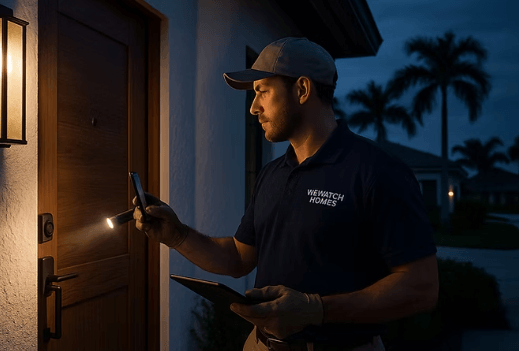
A proactive check involves testing the smoothness of the mechanism while the door is actually open.
If the lock operates smoothly while open but struggles when closed, the issue lies with the alignment of the door and frame—a problem that is much cheaper and easier to fix before the lock breaks entirely.
See also: Custom Staircase Builder in Norway for Fine Luxury Homes
What British Standard Labels Actually Mean
For the average person, all these security standards and certifications can feel like a confusing mess of acronyms. However, understanding these codes is vital for both physical safety and insurance compliance.
The gold standard for timber door locks in the UK is BS3621. This British Standard ensures the lock has been rigorously tested against picking, drilling, and physical force.
Many insurance providers specify in their small print that a property must have BS3621-compliant locks on all ground-floor exits to remain valid.
If a homeowner admits they haven’t checked their locks, they might also be unknowingly voiding their insurance policy, meaning a claim could be rejected following a break-in. For uPVC doors, the TS007 3-star rating is the benchmark to look for.
These standards exist to provide peace of mind, but they only work if the homeowner takes the time to inspect their hardware and ensure the little heart-shaped Kitemark is present on the face of the lock.
It is a small, etched detail that makes a massive difference in the aftermath of an attempted entry.
When It Makes Sense To Call A Professional
While there is a lot a homeowner can do themselves, there is a limit to DIY security. A professional eye can spot vulnerabilities that a layperson might miss, such as a “lazy cam” in a cylinder or a hairline crack in a multi-point locking strip that is destined to fail.
Furthermore, professionals have access to “keyed alike” systems.
This allows a homeowner to use one single high-security key for the front, back, and patio doors, which actually encourages better security habits by removing the annoyance of carrying a heavy bunch of keys.
Beyond the hardware, a professional can offer advice on the “weakest link” theory. There is little point in having a five-bolt fortress for a front door if the side gate is swinging open or the garage door can be lifted with a simple tool.
Property safety is a holistic endeavour, and turning to trusted home security locksmith solutions can make all the difference. An expert assessment can provide you with a clear list of where the true risks lie and help you attain peace of mind knowing everything’s safe.
It is about moving from a reactive mindset—fixing things when they break—to a proactive one where the home is kept secure year-round.
Conclusion
The admission that homeowners rarely check their door security is a necessary wake-up call. So, if we want our homes to remain our fortresses, we have to start paying attention to our security–there’s simply no way around it!
After all, protecting your space is a continuous commitment, and it all starts with a simple check of the current state of your front door and making the necessary adjustments. That way, you can attain peace of mind and ensure what’s yours is actually protected.
Good luck and stay safe!