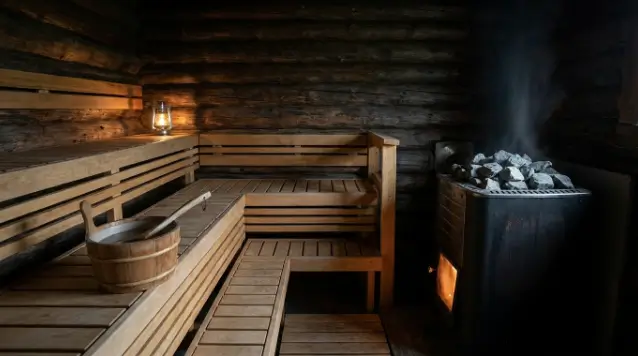
Contrast therapy alternates a traditional sauna session, typically 15 to 20 minutes at 170 to 190 degrees, with brief cold exposure, often 2 to 5 minutes in water around 50 to 59 degrees, usually for two to three rounds ending on cold. A budget setup pairs an existing or entry-level cedar cabin with a simple stock tank or unchilled plunge tub rather than a dedicated chiller, keeping the added cost to a few hundred dollars instead of several thousand. The evidence behind each half of the pairing is uneven: sauna use has a fairly solid research base, while cold-water immersion for recovery is genuinely mixed and worth understanding honestly before building a routine around it.
What Does a Basic Contrast Therapy Round Actually Look Like?
A typical round starts with 15 to 20 minutes in the sauna at 170 to 190 degrees, followed by a short, deliberate cold exposure, commonly 2 to 5 minutes in water in the 50 to 59 degree range, though some people use colder water for shorter periods. Two to three rounds is a common starting pattern, and most guidance suggests ending on cold rather than heat, since finishing on a cold exposure tends to leave people feeling more alert rather than sleepy. None of this needs to be precise to the minute. What matters more is the actual temperature contrast and giving the body real time in each zone rather than a token dip.
Do You Need an Expensive Chiller to Do This at Home?
No. A dedicated cold plunge chiller with filtration and ozone treatment is a real convenience, holding a set temperature continuously and keeping the water clean between uses, but it typically costs $3,000 to $6,000 or more, which is a significant add on top of a sauna purchase. A basic stock tank or an unheated plunge tub filled with cold tap water, topped off with bagged ice as needed, does the same core job for a fraction of the price, generally a few hundred dollars total. It requires more manual refilling and does not hold a precise temperature, but for a household doing contrast therapy a few times a week rather than daily, it is a reasonable way to try the practice before committing to a full chiller setup.
What Does the Sauna Half of the Pairing Actually Support?
The sauna side of contrast therapy has the better-established research behind it. Large cohort studies out of Finland have associated frequent sauna use, four to seven times a week, with lower rates of fatal cardiovascular events and all-cause mortality compared with infrequent use, and separate research has tracked favorable short-term changes in blood-based markers of cardiovascular function after sauna sessions in experienced users. These are population-level associations, not proof that sauna use prevents a specific outcome for any one person, but they are a reasonably consistent thread across multiple studies, which is not something that can be said as confidently about the cold half of the pairing.
Is the Cold Plunge Side of This Actually Backed by Evidence?
Here the picture is more mixed, and it is worth being straightforward about it. A 2025 systematic review and meta-analysis in PLoS One looking at cold-water immersion and health outcomes found a mixed evidence base overall, and separate research on cold water immersion specifically for post-exercise recovery, including a Cochrane review and a more recent meta-analysis in Frontiers in Physiology, has found real but inconsistent effects on fatigue and soreness, alongside evidence that cold exposure soon after resistance training may blunt part of the strength and muscle-building adaptation compared with passive recovery. This does not mean cold plunging is not worth doing. It means the case for cold exposure is different in kind from the case for sauna use, more about subjective recovery and a strong contrast sensation than a settled physiological benefit, and anyone doing serious strength training might reasonably time cold plunges away from heavy lifting days rather than immediately after.
How Should a Budget Household Actually Build This Setup?
Start with whichever half is already in place. A household that already owns a sauna needs only a stock tank, a garden hose, and a bag or two of ice per session to try contrast therapy without any real new purchase. A household starting from scratch should generally prioritize the sauna investment first, since it has the stronger research behind it and gets daily use on its own even without a cold plunge attached, then add a basic cold tub once the sauna habit is established. When comparing cabins sized to sit near a plunge setup, checking a couple of sellers, including a dedicated retailer like Sweat Decks, for models with enough clearance around the door for a tub to sit close by is worth doing before ordering, since retrofitting clearance around an already-installed cabin is far more annoying than planning for it upfront.
What Is a Sensible Way to Start?
New contrast therapy users generally do better starting conservatively: one round to begin, 15 minutes of heat and a brief 60 to 90 second cold exposure, building up to two or three full rounds over a few weeks as tolerance develops. Anyone with a heart condition, uncontrolled blood pressure, or who is pregnant should talk with a doctor before starting either half of this practice, since both heat and sudden cold exposure raise cardiovascular demand in ways that matter more for those specific situations than for a generally healthy adult easing into the routine.
Frequently Asked Questions
How does contrast therapy work with a sauna and cold plunge? It alternates 15 to 20 minutes in a sauna at 170 to 190 degrees with 2 to 5 minutes of cold exposure around 50 to 59 degrees, typically for two to three rounds.
Does cold plunging after a workout hurt muscle growth? Some research suggests cold-water immersion soon after resistance training may blunt part of the muscle-building adaptation, more relevant to serious strength training than general recovery.
What is a budget way to add a cold plunge to a home sauna setup? A basic stock tank filled with cold water and ice costs a few hundred dollars, versus $3,000 or more for a dedicated chiller with filtration.
How many rounds of contrast therapy is reasonable to start with? Two to three rounds is common, ending on cold. Beginners often do better with shorter cold exposure, building up gradually.
References
- Association between sauna bathing and fatal cardiovascular and all-cause mortality events, JAMA Internal Medicine, 2015
- Joint associations of sauna bathing and cardiorespiratory fitness on cardiovascular and all-cause mortality risk: a long-term prospective cohort study, Annals of Medicine, 2018
- Short-term effects of Finnish sauna bathing on blood-based markers of cardiovascular function in non-naive sauna users, Heart and Vessels, 2018
- Effects of cold-water immersion on health and wellbeing: A systematic review and meta-analysis, PLoS One, 2025
- Effects of cold water immersion after exercise on fatigue recovery and exercise performance: meta analysis, Frontiers in Physiology, 2023
- Cold-water immersion (cryotherapy) for preventing and treating muscle soreness after exercise, Cochrane Database of Systematic Reviews, 2012
By Heather Solberg